
Most seven-day Bali itineraries are really three itineraries stitched together. Two nights in the south, two in Ubud, two somewhere else, and a driver waiting in reception each morning with your luggage in the boot. You spend a meaningful part of your week checking out, checking in, and waiting for a room to be ready.
There is another way to do it, and on an island this size it is the better one. Bali is about 150 kilometres across. From the right base you can reach the sea, the rice terraces, the temples and the mountains inside an hour, be back for dinner, and sleep in the same bed for seven nights. You unpack once. The week stops being a logistics exercise and becomes a holiday.
This is that week: the things people actually come to Bali for, arranged so you are not spending it in transit.
Why one base works better than three
The driving is the same either way. Moving hotels does not reduce your time in the car — it front-loads it, adds a check-out, and costs you the middle of two days. From a single base you make the same journeys, but you make them when you want to and you come home to a room that is already yours.
You stop being a new guest every second day. There is a version of luxury that only appears on about day three, once the staff know how you take your coffee and which table you prefer. You never reach it if you keep starting again.
Your evenings improve enormously. The difference between a good Bali day and a great one is usually what happens after six o'clock, and that is difficult to enjoy when tomorrow involves packing.
You can be spontaneous. A fixed base makes it easy to abandon the plan. Rain on the day you booked the rice terraces? Swap it for the spa and go on Thursday instead. That flexibility is impossible when the next hotel expects you.
Where to base yourself
The usual answer is Seminyak or Ubud, and both have a cost. Seminyak puts you in traffic and noise. Ubud puts you an hour from the sea and, increasingly, in a queue.
The southwest coast solves the geometry. Tabanan is Bali's agricultural province — rice fields, black-sand beaches, a working landscape rather than a resort strip — and it sits between the developed south and the untouched interior. You are twenty minutes from Canggu when you want a beach club and forty-five from Jatiluwih when you want terraces, without living in either.
Here is what a week from that side of the island reaches, with real driving times rather than optimistic ones:
| Destination | Drive |
|---|---|
| Kedungu Beach | 2 minutes |
| Tanah Lot Temple | 7 minutes |
| Canggu, Batu Bolong, Echo Beach | 20–30 minutes |
| Jatiluwih rice terraces | 45 minutes |
| Seminyak | 50 minutes |
| Ubud | 1 hour |
| Ngurah Rai Airport (DPS) | approximately 90 minutes |
Note the last line. Any Bali hotel that tells you the airport is forty-five minutes away is quoting you a time that exists only at four in the morning. Plan for ninety and you will never be anxious.
The seven days
Day one — arrive, and do almost nothing
You will land tired. The flight from most places is long, the airport is busy, and the drive is ninety minutes. The temptation is to fill the afternoon. Resist it.
Swim. Eat somewhere you do not have to drive to. Go to bed early enough that you wake at six on day two without meaning to, which is when Bali is at its best and when almost every visitor is asleep.
If you have the energy for one thing, make it sunset at Tanah Lot — a sea temple on a rock offshore, seven minutes away, at the hour it was built to be seen. It asks nothing of you but showing up.
Day two — the water
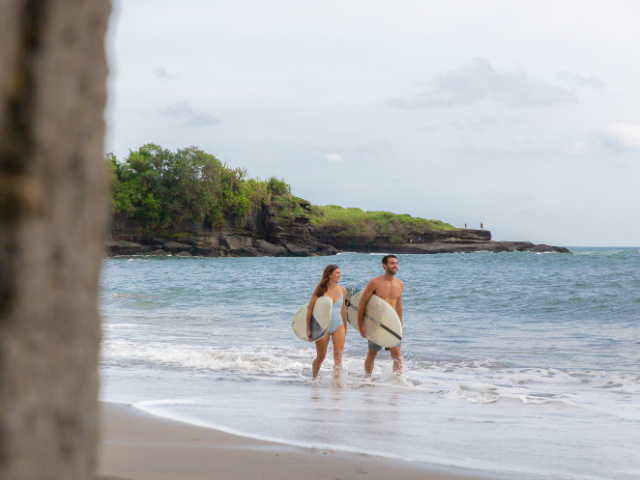
Bali's southwest coast is black volcanic sand and real surf. Kedungu has three breaks and a surfing community that has been there far longer than the visitors.
Morning is for the sea, whether that means a lesson, a longer session if you already surf, or simply the beach before the heat arrives. Beginners do better here than in Canggu for the reason beginners always do better away from crowds: you get more waves and fewer collisions.
Afternoon is for doing nothing with conviction. This is the day the week is built on, and the day most itineraries skip.
Day three — the terraces and the mountain
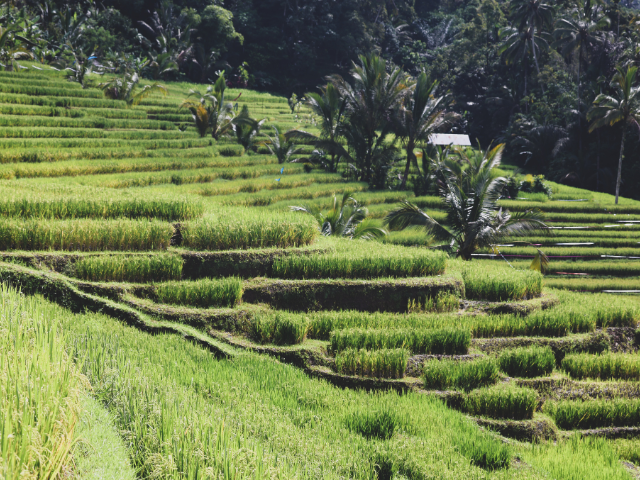
Jatiluwih is the rice landscape people picture when they picture Bali, and it is forty-five minutes inland. The terraces are farmed, not staged — they follow contour lines cut over centuries and irrigated by a cooperative system the villages manage themselves.
Go early. Terraces are at their best in the first light and their worst at midday, and the coach traffic builds from about ten.
Pair it with Batukaru, Bali's second-highest volcano, and the temple on its slopes. The temple sits in cloud forest rather than on a tourist route, and the change in air as you climb is the most underrated thing about inland Bali.
Day four — Ubud, done properly
Ubud is an hour away and worth a day, provided you treat it as a day rather than a base.
Go for the things that are genuinely there: the craft, the galleries, the food, the walk along the Campuhan ridge before breakfast. Skip the things that have become photographs of themselves. Ubud's centre in the middle of the afternoon is a traffic jam with a monkey forest attached; Ubud at eight in the morning is a different town entirely.
Then come back. That is the whole argument for a base — you get the best six hours of Ubud without the compromise of sleeping there.
Day five — the spa day
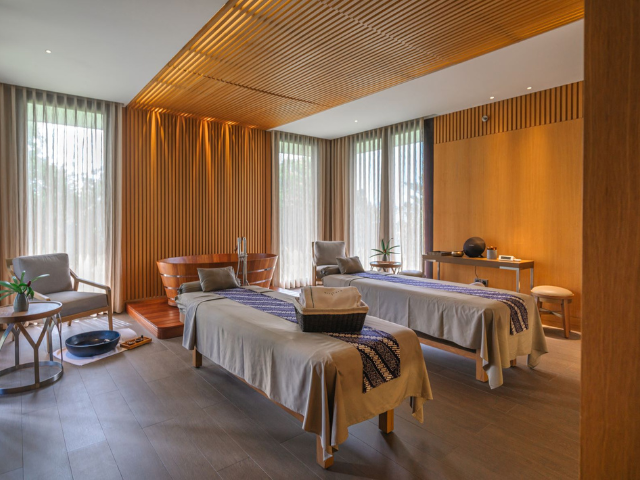
Everyone plans one and almost nobody plans it properly. A spa day works when it is the day, not ninety minutes wedged between two drives.
Balinese massage traditions are village traditions: historically each village had its own healer, and no two sequences were alike. The good treatments on the island still carry that — a consultation first, then something built for you, rather than a menu item.
Give it the whole day. Sauna, treatment, pool, a long lunch, nothing scheduled after. You will feel the difference on days six and seven, which is the point.
Day six — the north, or the hills
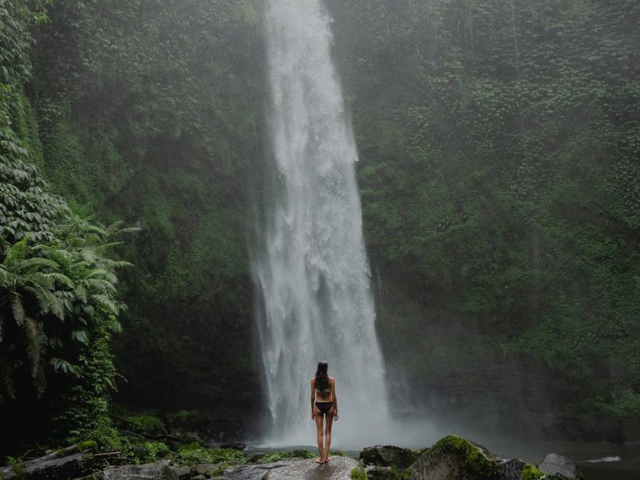
Two good options, depending on what the week has been short of.
If you want water: the north has waterfalls that make the southern ones look like water features — Nungnung among them — and they come with a temple or two and a forest that is noticeably cooler than the coast.
If you want quiet: the hills of Tabanan. Batukaru temple, the terraces, and a waterfall that most itineraries have never heard of, all within a half day and almost entirely without crowds.
Either way you are back for the evening, which matters more on day six than it did on day two.
Day seven — the day you did not plan
Leave it empty. By day seven you will know what your week was short of — another morning in the sea, the market you drove past, a second visit to the one restaurant that was better than the rest, or nothing at all.
The best-designed week has one day that is not designed.
What a luxury week actually costs you
Not money — the thing people get wrong is what they spend their week on.
Do not book a driver for every day. Three or four excursions in seven days is plenty. More than that and you have arranged a coach tour with better bedding.
Do not chase sunrise every morning. Twice is memorable. Every day is a job.
Do not eat every meal out. Bali's best food is often the food that never leaves the property it was grown on. An island this fertile makes the farm-to-table claim easy to verify — ask where the produce comes from, and ask how far.
Do not compress the temples. Two temples, properly, beats six from a car window. Tanah Lot at sunset and Batukaru in the morning are different experiences of the same religion and both are worth an unhurried hour.
Do book the long transfers at the right end of the day. Ninety minutes to the airport is fine at ten in the morning and unpleasant at five in the afternoon.
When to come
| Period | What it is like |
|---|---|
| April to June | The sweet spot. Dry, green from the rains, and quieter than July |
| July and August | Best weather, highest prices, most people |
| September and October | Warm, dry, and the crowds thin from mid-September |
| November to March | Wet season. Heavy afternoon bursts rather than all-day rain, lowest prices, greenest landscape |
The wet season is consistently undersold. If your week can be flexible about afternoons, it is the best value on the island and the rice fields have never looked better.
Seven days at Nirjhara

We are in Kedungu, in Tabanan, on the southwest coast — which is the base this itinerary is built around, because it is the one that makes the arithmetic work.
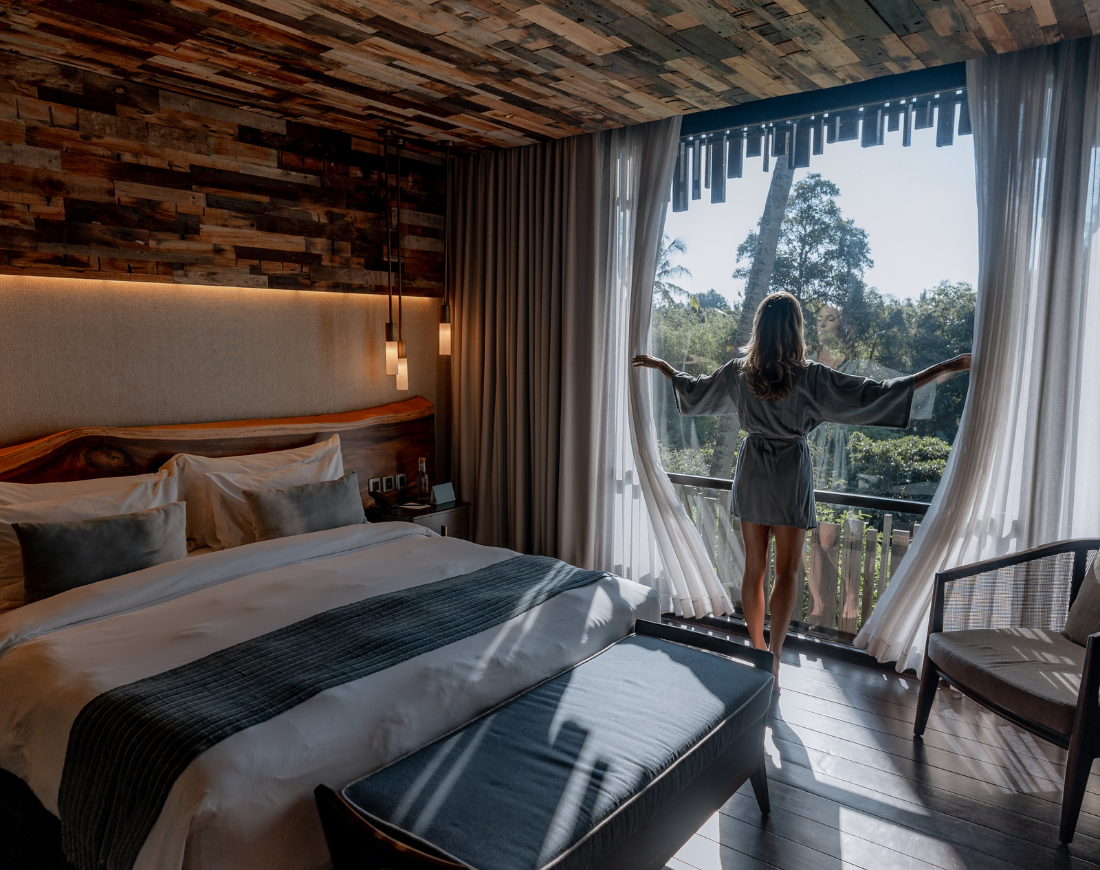
There are twenty-five villas, and a waterfall under the pool deck. Not a waterfall you hike to. The property was built around it, and it is audible from most of the resort. Eighty-five per cent of the suites look out over waterfalls, rice fields or the ocean sunset. The Canopy Suites are treehouses clad in reclaimed wood, elevated into the canopy; The Residence gives a family or a couple 240m² to themselves.
The excursions in this itinerary are ones we run. Complimentary guided cycling to Tanah Lot or Pigstone Beach through the villages and rice fields, with fifteen bicycles on the property. Surfing at Kedungu with the local community. Horseback riding on the beach and through the rice fields. In the Hills of Tabanan covers Batukaru, Jatiluwih and Yeh Ho waterfall in a half day. Journey to the North takes in Nungnung waterfall, Sangeh Monkey Forest — considerably quieter than Ubud's — and the seventeenth-century Bukit Sari temple. Hidden Valley Trekking walks through working rice fields to a temple with Buddhist pagoda architecture.
Day five is The Retreat. Four treatment rooms set into the hillside around a reflection pool, two Finnish saunas, and a yoga shala designed by IBUKU — the bamboo architecture studio who are our neighbours here — overlooking the valley by the river. The Balinese Village Massage begins with a one-to-one consultation and is built for you rather than chosen from a list, which is the village-healer tradition rather than a spa convention. The Five Blessings are two-hour sequences presented on hand-carved lontar parchment.
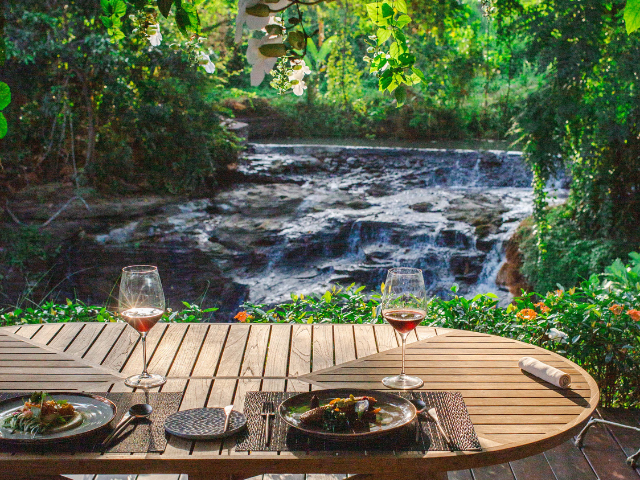
Dinner is the part that does not require a drive. Ambu changes its menu daily, is run by a wholly Indonesian kitchen team, and sources over ninety per cent of its produce from Bali — most of it from Tabanan or from the 700m² organic garden on the property. The restaurant is naturally ventilated rather than air-conditioned, designed for airflow. Fish is line-caught from Indonesian waters. For one evening of the week, private dining can be set by the waterfall, on the clifftop platform, or in the garden by candlelight.
And the week can be arranged before you arrive. Contact us with your dates and what you want the week to be, and we will put the excursions, the treatments and the long lunches in an order that leaves you the empty day.
Frequently asked questions
Is seven days enough for Bali?
Seven days is enough to see Bali properly if you stay in one place, and not quite enough if you keep moving. From a single base you can reach the coast, the rice terraces, Ubud, the temples and the northern waterfalls with time left over. Split across three hotels, the same week loses the better part of two days to checking in and out.
How many days in Bali is ideal?
Seven to ten. Five feels rushed once you account for arrival and departure days. Beyond ten, most visitors add a second island — Lombok, the Gilis or Nusa Penida — rather than more of Bali.
What is the best area to stay in Bali for a week?
It depends on what you want the week to be. Seminyak and Canggu put you among restaurants and beach clubs but also in traffic. Ubud puts you in the culture and an hour from the sea. The southwest coast — Tabanan — sits between them: twenty minutes from Canggu, forty-five from the terraces, an hour from Ubud, and quiet at night.
How far is Bali airport from the southwest coast?
Approximately ninety minutes by private transfer to the Kedungu area. Treat any shorter estimate with suspicion — the road through the south is rarely empty.
What should you not do in Bali?
Over-schedule it. The most common mistake is booking an excursion every day, which turns a holiday into a tour. Three or four proper days out in a week is plenty, and the empty days are the ones people remember.
Is Bali good in the rainy season?
Better than its reputation. Rain in the wet season tends to arrive in heavy afternoon bursts rather than settling in for the day, mornings are often clear, the landscape is at its greenest and prices are at their lowest. If your itinerary can be flexible about afternoons, it is good value.
Can you see rice terraces and beaches in the same day?
Yes, from the right base. Jatiluwih is forty-five minutes inland from the southwest coast and the sea is two minutes away, so a terrace morning and a beach afternoon is an ordinary day rather than an ambitious one.


