
Bali has thousands of temples. Every village has three, every family compound has one, and the rice fields have their own. Narrowing that to a shortlist is not a question of which are most beautiful — it is a question of what each one is for, because the island's major temples were built to do different jobs in different places.
Five answer that question better than any others: a temple on a rock in the sea, a temple on a cliff above it, the mother temple on the volcano, a spring temple where people still come to be cleansed, and a highland temple whose gates frame the mountain. Understand what each is, and the shortlist builds itself.
The five, and what each one is
| Rule | What it means in practice |
|---|---|
| Sarong and sash | Required to enter, at every temple on this list. Most sites hire or lend them at the entrance, but bringing your own is simpler |
| Shoulders and knees covered | Applies regardless of the sarong. A sarong over beachwear is not sufficient at the larger complexes |
| Ceremony takes precedence | Areas close without notice when a ceremony is under way. This is not a disruption to your visit; it is the temple doing its job |
| Menstruating women do not enter | A standing rule of Balinese Hindu practice, posted at temple entrances |
| Do not climb or sit on shrines | Including for photographs, and including structures that look like walls |
| Follow the inner courtyard limits | At most temples the innermost courtyard is for worshippers. Where a boundary is marked, it is not a suggestion |
| Remove footwear where indicated | And step over, not on, offerings placed on the ground |
Two of them sit on the coast, two in the eastern highlands, one in the centre. That geography is not incidental: it is the reason you cannot see all five well in a single day, and the reason most attempts to do so produce five car parks and no temples.
Pura Besakih — the mother temple
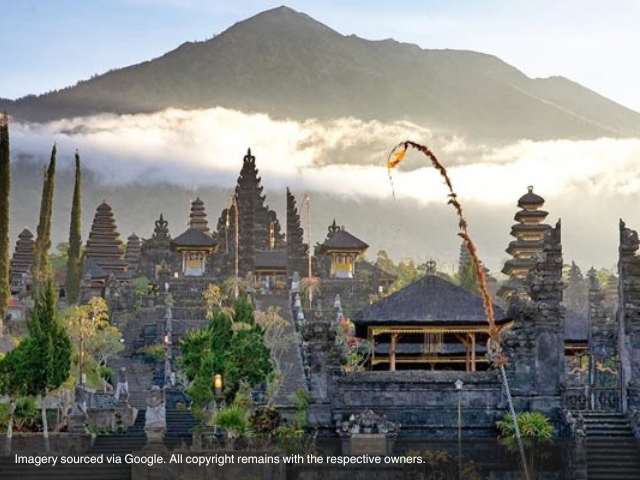
If you visit one, visit this one. Besakih is the largest and holiest Hindu temple complex in Bali, and it is not a single temple but more than eighty of them, rising in terraces on the slopes of Mount Agung in Karangasem.
It is also the one where the difference between a visit and an understanding is widest. Besakih is the island's ceremonial centre, which means it is working. On ceremony days the complex fills with Balinese Hindus, not visitors, and that is the version worth seeing. On an ordinary morning it is a vast stone staircase with the volcano above it.
Two practical notes. It is two to three hours from Ubud, which makes it a full day rather than a stop. And Besakih has a long-standing reputation for unofficial guides attaching themselves to visitors at the entrance; the official ticket office is the only place to arrange anything.
Tirta Empul — the one that is still in use
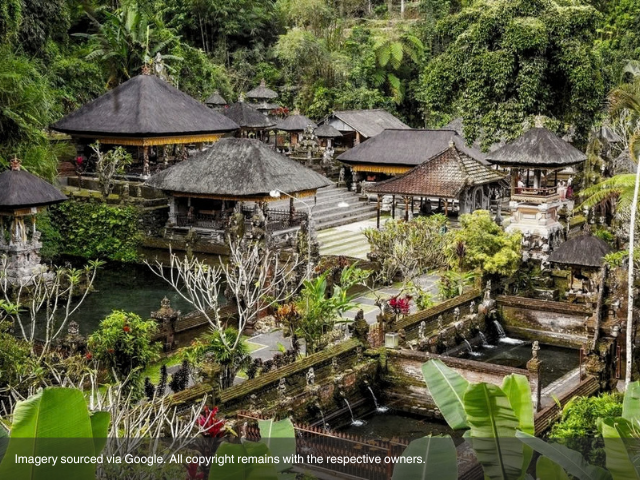
Founded in 926 AD and in continuous use since, Tirta Empul in Tampaksiring is where Balinese Hindus come for melukat — ritual cleansing in the spring water. The pools are fed by a sacred spring, and the water is believed to have healing properties.
This is the temple on the list where you are most likely to find yourself a guest at someone else's ritual rather than a sightseer at a monument. Visitors can take part, and many do, but it is worth arriving understanding what the queue of people in the water is actually doing. If you intend to enter the pools, you will need a sarong for the water and dry clothes for afterwards.
Thirty minutes from Ubud, which makes it the easiest of the five to combine with something else.
Pura Lempuyang — the gates, and what is behind them
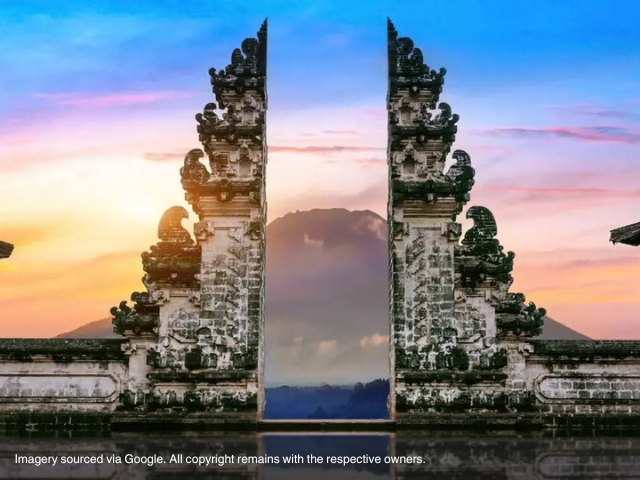
Lempuyang is known worldwide for one thing: a pair of split gates with Mount Agung framed between them. That image has made it one of the most photographed places in Indonesia, and the queue for the gates can be long.
What is less well known is that the gates are the entrance, not the destination. Lempuyang is one of the oldest and most spiritually significant temples in Bali, and the complex continues uphill well beyond the point where most visitors turn around with their photograph. Going further is a climb, and it is the part of the visit nobody queues for.
Two to three hours from central Bali, in the same eastern corner as Besakih — which is why the two are usually done together, and why that day is a long one.
Tanah Lot and Uluwatu — the sea temples
These two have guides of their own, because both reward more planning than a shortlist can carry.
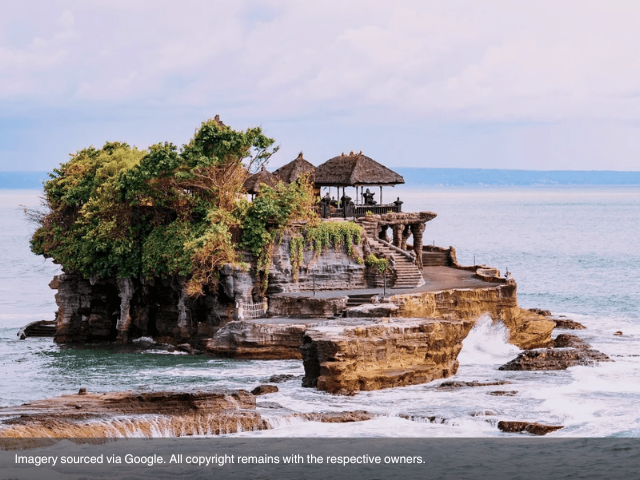
Tanah Lot sits on a rock offshore in Tabanan, and the tide decides your visit. At low tide you can walk across to the base; at high tide you photograph it from the shore. Those are two different visits and the difference is hours, not minutes. It is seven minutes from Kedungu, which makes it the only temple on this list that works as an early morning or late afternoon trip rather than a day out.
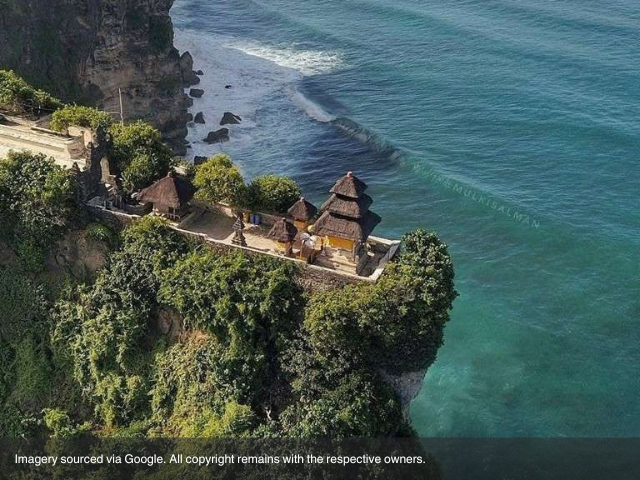
Pura Luhur Uluwatu sits on the cliffs of the southern peninsula, and its draw is the kecak performance staged in the amphitheatre at sunset. The sunset time matters more than the schedule suggests, and the monkeys at the entrance are genuinely practised at removing sunglasses.
Temple conduct — the parts that are not optional
| Rule | What it means in practice |
|---|---|
| Sarong and sash | Required to enter, at every temple on this list. Most sites hire or lend them at the entrance, but bringing your own is simpler |
| Shoulders and knees covered | Applies regardless of the sarong. A sarong over beachwear is not sufficient at the larger complexes |
| Ceremony takes precedence | Areas close without notice when a ceremony is under way. This is not a disruption to your visit; it is the temple doing its job |
| Menstruating women do not enter | A standing rule of Balinese Hindu practice, posted at temple entrances |
| Do not climb or sit on shrines | Including for photographs, and including structures that look like walls |
| Follow the inner courtyard limits | At most temples the innermost courtyard is for worshippers. Where a boundary is marked, it is not a suggestion |
| Remove footwear where indicated | And step over, not on, offerings placed on the ground |
The ones that did not make the list
A shortlist of five leaves out temples that would head most people's list of favourites, and it is worth saying which and why, because several may suit your trip better than one of the five.
Pura Ulun Danu Beratan, on the lake at Bedugul, is the image on the Indonesian banknote and the most photographed temple on the island after Lempuyang's gates. It is left off here because its appeal is largely the view across the water; as a temple it does less work than Besakih or Tirta Empul. If you are driving the mountain road it is an easy and worthwhile stop.
Pura Taman Ayun at Mengwi is a royal temple surrounded by a moat, and architecturally one of the finest on the island. It sits inside the UNESCO-listed cultural landscape of Bali province. It is the strongest candidate for a sixth.
Goa Gajah, the Elephant Cave near Ubud, and Gunung Kawi, the rock-cut shrines near Tampaksiring, are both remarkable and both closer to archaeological sites than to working temples. Either combines well with Tirta Empul on the same half-day.
Tirta Gangga is a water palace rather than a temple, and is frequently sold as part of the eastern day with Besakih and Lempuyang. If that day feels long, this is the part to drop.
The five chosen here are the ones where the temple's function — sea, mountain, water, ceremony — is the reason to go. The others are chosen for their setting, which is a different and perfectly good reason.
Ceremony days change everything
Balinese Hindu festivals follow a calendar that does not line up with the Gregorian one, so the dates move every year. That has two consequences for a temple visit, and they pull in opposite directions.
The first is that a temple during a ceremony is the best version of itself. Processions, offerings, gamelan, the whole community in white and gold — this is what the architecture is for, and no amount of early-morning quiet substitutes for it. If your dates coincide with one, rearrange the itinerary around it.
The second is that access tightens. Courtyards close, parking fills with the congregation rather than with visitors, and the limits on where a non-worshipper may stand are enforced more firmly, as they should be. Nothing about this is a problem to be solved; it is the correct order of priorities.
Nyepi, the Balinese day of silence, is the exception that affects the whole island rather than one temple. For twenty-four hours nothing moves: no flights, no traffic, no going outside, including for visitors. The day before is one of the island's great spectacles and the day itself closes everything. It is worth knowing which date it falls on in the year you travel before you build a temple itinerary around it.
Guides, tickets and the things that cost money
Three practical points that recur at every temple on this list.
Entrance fees exist and they change. Every one of the five charges, and the amounts are revised periodically. Any figure published in a travel article — including the ones you will find quoted confidently elsewhere — should be treated as indicative. The ticket office is the only reliable source on the day.
Sarong hire is usually included, sometimes not. At the larger complexes a sarong and sash come with the ticket. At smaller sites they are a separate small charge, and at a few you are expected to have your own. Carrying one sarong between two people solves this for the whole trip.
Unofficial guides are a feature of the big sites. At Besakih in particular, people will attach themselves at the entrance and present themselves as required. They are not. If you want a guide — and at Besakih a good one genuinely improves the visit — arrange it at the official ticket office and agree the price before you start walking.
One more, for the eastern pair: the drive is long enough that a car and driver for the day is almost always better value than two separate trips, and it means somebody else deals with the parking at Lempuyang.
Building a route that works
The honest version: five temples is two days, not one.
The eastern day — Besakih and Lempuyang. Both in Karangasem, both two to three hours out, both worth the drive. Start early; the mountain clouds over by midday and Agung behind the gates is the entire point of Lempuyang.
The central half-day — Tirta Empul, thirty minutes from Ubud, combined with Ubud itself or the rice terraces.
The west coast evening — Tanah Lot, which is seven minutes from Kedungu and best at low tide or last light.
The southern day — Uluwatu, with the beaches below the cliffs and the kecak at sunset.
From Kedungu, in Tabanan, Tanah Lot is a short drive and Ubud is about an hour inland, which puts Tirta Empul within a comfortable half-day. The eastern pair is a committed day in either direction from anywhere on the island.
Frequently asked questions
What is the most important temple in Bali?
Pura Besakih, on the slopes of Mount Agung. It is known as the Mother Temple, is the island's largest and holiest Hindu complex, and comprises more than eighty temples.
How many temples should you visit in Bali?
Two or three, properly, rather than five in a rush. Bali's major temples are spread across the island and two of the five best sit two to three hours out in the east, so a thorough shortlist is two days rather than one.
Do you need to wear a sarong at Bali temples?
Yes. A sarong and sash are required to enter, and shoulders and knees must be covered. Most temples hire or lend sarongs at the entrance, but bringing your own avoids the queue.
Which Bali temple is the Gates of Heaven?
Pura Lempuyang, in Karangasem in East Bali. Its split gates frame Mount Agung, which is why it has become one of the most photographed places in Indonesia.
Can you swim at Tirta Empul?
You can take part in the melukat cleansing ritual in the spring-fed pools, which is what the pools are for rather than swimming. Bring a sarong for the water and dry clothes for afterwards.
How old are Bali's temples?
Tirta Empul was founded in 926 AD and has been in continuous use since. Lempuyang is described as one of the oldest temples on the island.
What is the best time of day to visit a Bali temple?
Early morning at the inland and highland temples, before the cloud builds over Mount Agung. Late afternoon at the sea temples, where the light and, at Tanah Lot, the tide both matter.
Can you enter a Bali temple during a ceremony?
Parts of a temple close without notice when a ceremony is under way, and those limits are not negotiable. A ceremony is the best thing you can witness at a Balinese temple, from where you are permitted to stand.
How far is Tanah Lot from Tabanan?
Tanah Lot is in Tabanan. From Kedungu, on the regency's coast, it is about seven minutes by road.
Sources consulted
- Indonesia Travel — Must-visit temples in Bali — https://www.indonesia.travel/us/en/travel-ideas/heritage/6-must-visit-temples-in-bali-to-experience-bliss
- Indonesia Travel — The holy springs of Tirta Empul — https://www.indonesia.travel/us/en/destination/bali-nusa-tenggara/bali/bali---the-holy-springs-of-tirta-empul
- Indonesia Travel — Tanah Lot — https://www.indonesia.travel/us/en/destination/bali-nusa-tenggara/bali/tanah-lot
- Indonesia Travel — Bali's spiritual cleansing: sacred sites for the melukat ritual — https://www.indonesia.travel/us/en/travel-ideas/wellness/balis-spiritual-cleansing-5-sacred-sites-for-the-soulful-melukat-ritual


