
Visitors to Bali eat well, but much of what they eat is not Balinese. The island's restaurants serve food from every part of the world, and many of the Indonesian dishes on its menus come from elsewhere in the archipelago.
Balinese food is the cooking of a farming island: rice from the terraces, spice pastes ground by hand, and dishes shaped by ceremony as much as by appetite.
This guide covers what Balinese food is, the dishes worth knowing, where the ingredients come from and how to eat it well. For the island's restaurants, see our guide to the best restaurants in Bali.
What makes food Balinese
Three things set Balinese cooking apart from the rest of Indonesia.
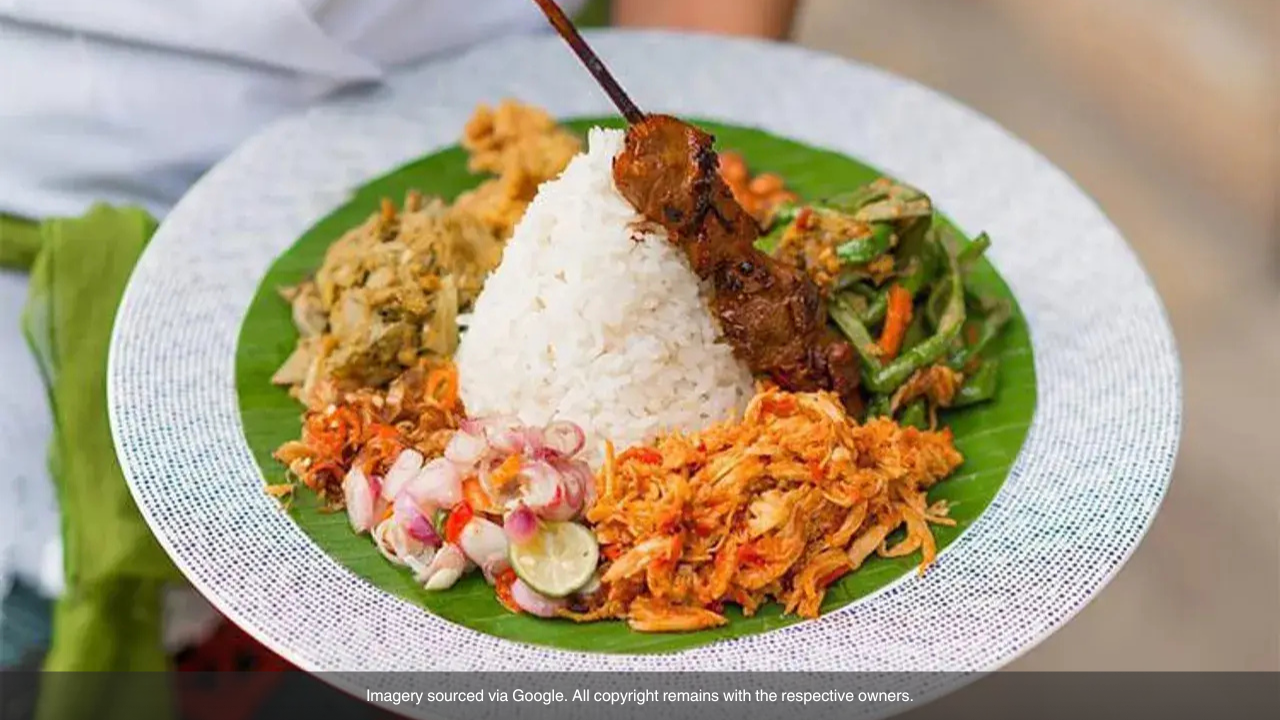
Rice at the centre. A Balinese meal is rice with things around it. The rice comes from the island's terraces, grown with water shared between farmers through the subak irrigation system, and it is treated with respect: rice is offered to the gods before it is eaten.
The spice paste. Most Balinese dishes begin with base genep, also called basa gede, a paste of shallots, garlic, chillies, galangal, turmeric, ginger, candlenut and other roots and spices, ground together by hand. Every family has its own balance. It gives Balinese food its depth and its warmth.
Ceremony. Bali is mostly Hindu, unlike the rest of Indonesia, and its food reflects that. Pork and duck appear at temple festivals and family ceremonies, often prepared over many hours by the men of the village working together. Some of the island's best-known dishes are, first of all, ceremonial food.
The dishes worth knowing
These are the dishes that define the island's cooking. Not every one appears on every menu, and some are best found at a ceremony or a family table.
| Dish | What it is | When it is eaten |
|---|---|---|
| Babi guling | Whole pig rubbed with spice paste and roasted on a spit | Ceremonies and celebrations, and at specialist warung |
| Bebek betutu | Duck stuffed with spice paste, wrapped in leaves and cooked slowly | Ceremonies, or ordered in advance |
| Lawar | Finely chopped meat or vegetables mixed with grated coconut and spices | Ceremonies and everyday meals |
| Sate lilit | Minced fish or meat with spices, wrapped around lemongrass or bamboo and grilled | Everyday, and at ceremonies |
| Sambal matah | A raw relish of shallots, lemongrass, chilli and lime | Alongside almost any meal |
| Nasi campur | Rice with a selection of small dishes around it | The everyday meal, at home and at warung |
| Jaja | Sweet cakes of rice flour, coconut and palm sugar | Offerings, ceremonies and afternoon snacks |
Start with nasi campur. It is the simplest way to taste several dishes at once, and every warung makes its own version.
Ask for sambal matah. It is uncooked, bright and sharp, and the clearest taste of the island's ingredients.
Plan ahead for bebek betutu. The slow cooking means it is often made to order, so ask a day ahead.
Where it comes from
Balinese food is local in the plainest sense. Most of it comes from the land and sea within a short drive of where it is cooked.
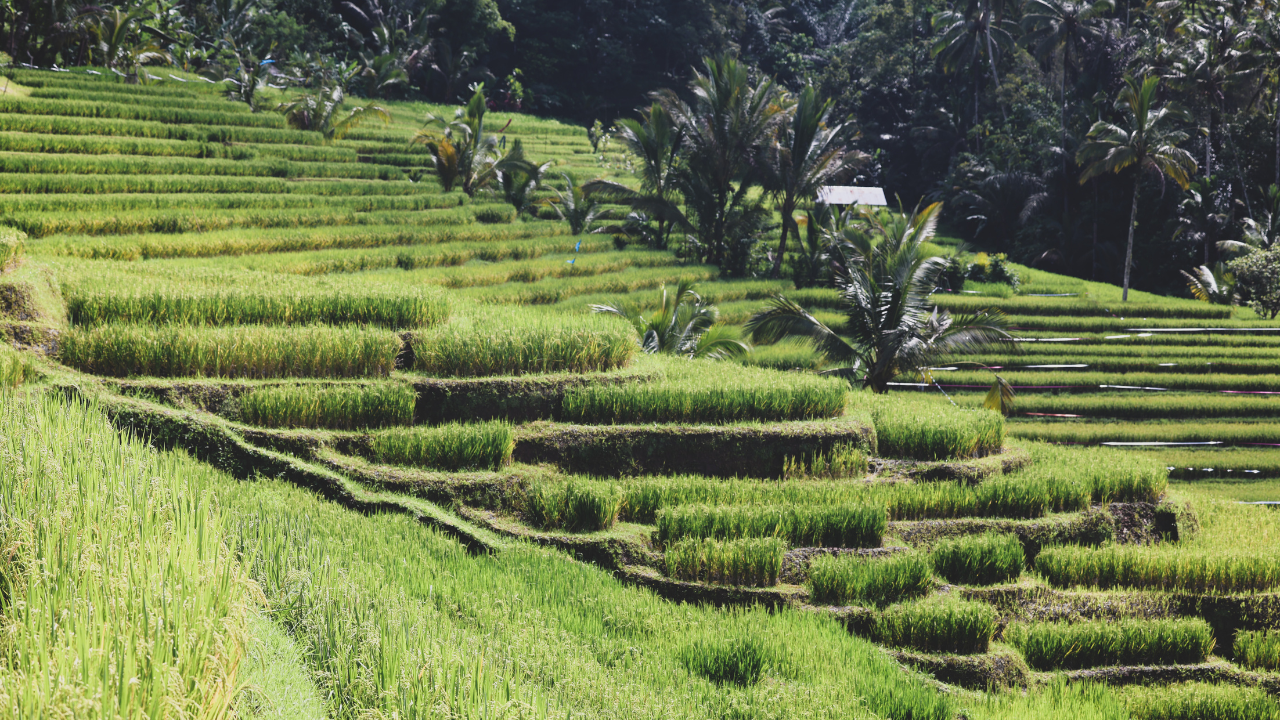
The terraces. Rice is grown across the island, but Tabanan, Bali's green agricultural province, has long been its rice bowl. The terraces here are fed by water from the volcanoes, carried field by field through the subak. Our guide to Bali's rice terraces explains how the system works.
The gardens and markets. Chillies, shallots, lemongrass, ginger and turmeric grow in family gardens and fill the morning markets. A market visit before breakfast shows you the raw material of every dish you will eat that day.
The sea. Fish comes from the waters around the island, caught by local boats and sold at local markets. On the coast, grilled fish with sambal is the everyday meal.
The offerings. Small trays of flowers, rice and food are placed in temples, shrines and doorways every day. They are a reminder that in Bali, food is given before it is eaten.
How to eat Balinese food well
A few habits make a real difference.
Eat at a warung. Small family-run eateries serve the food the island eats. Go at lunchtime, when the food is fresh.
Take a cooking class. Grinding the spice paste yourself explains Balinese cooking better than any menu. Our guide to a cooking class in Bali covers what a class teaches.
Eat with your right hand. Many Balinese eat with the fingers of the right hand. It is never expected of visitors, but it is welcomed.
Go gently with the chilli. Balinese food can be very hot. Ask for less chilli if you prefer; nobody will mind.
Balinese food at Nirjhara
This is our own property, so read this section with that in mind.
Nirjhara sits in Kedungu, Tabanan, on the southwest coast, in the heart of the island's rice-growing province. Our cooking draws on what grows around us.
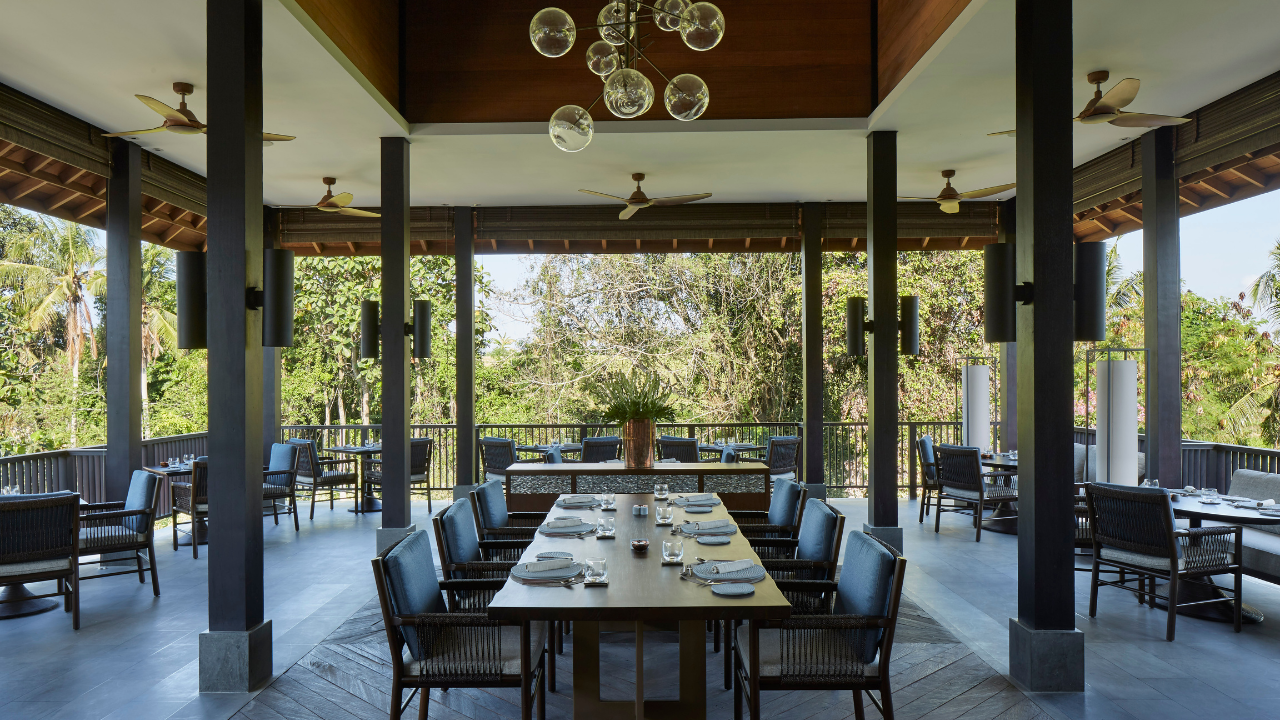
Ambu. Ambu is our farm-to-table restaurant. It blends traditional Balinese cooking with modern classics, using ingredients sourced throughout the region or from our own vegetable garden; over 90 per cent of our produce is sourced locally or from that garden.
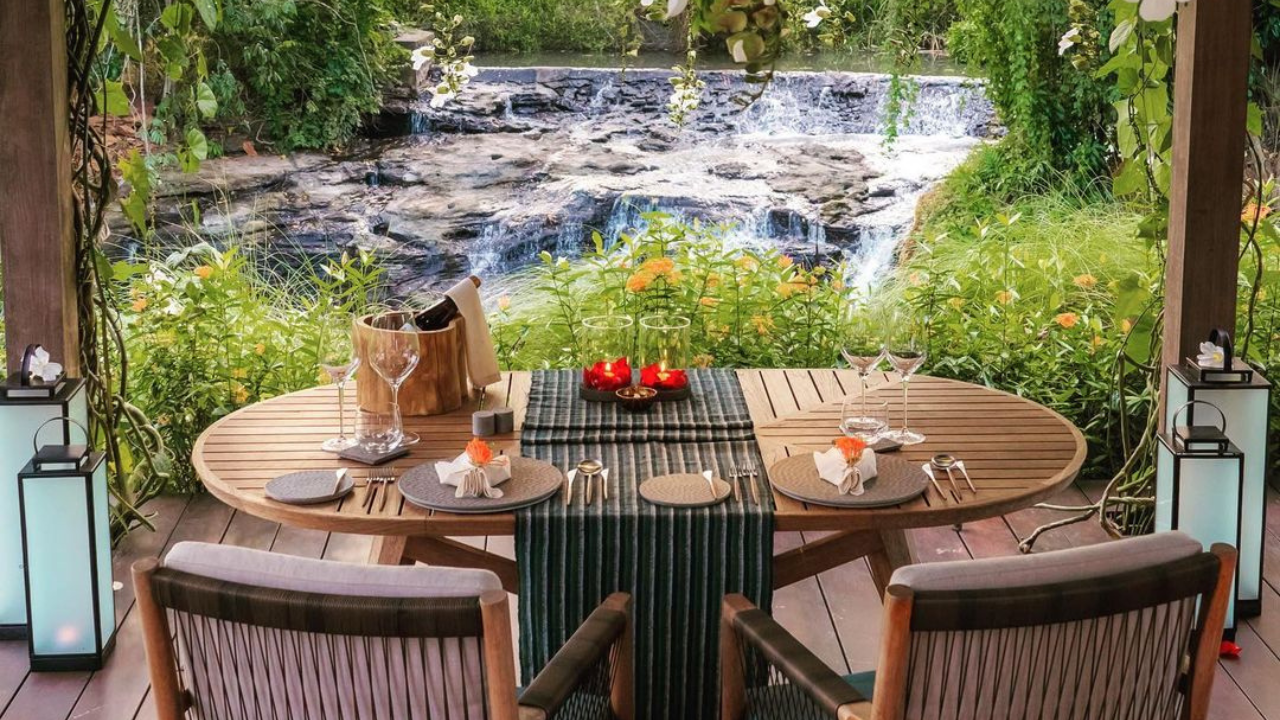
The garden. Our 700m² organic garden grows the vegetables and herbs that go into Ambu's kitchen.
Cooking with us. Guests can join our chef under Ambu's pergola for a cooking class in Balinese ingredients and techniques, and our Pool Bar serves fresh juices and creative Indonesian cocktails by the main pool.

The rest of the stay. Our twenty-five villas include the Jungle Pool Villa, and 85 per cent of the suites have views. Tanah Lot is 7 minutes away and Kedungu Beach is 2 minutes. Nirjhara holds One MICHELIN Key.
Getting here. The airport (DPS) is approximately 90 minutes away. Most visitors need a visa, which can be applied for in advance on Indonesia's official e-Visa site, evisa.imigrasi.go.id; our Bali e-Visa guide explains the process.
To reserve a table at Ambu or plan a stay, contact us.
Frequently asked questions
What is traditional Balinese food?
Rice with spiced dishes around it, built on base genep, a hand-ground paste of shallots, garlic, chillies, galangal, turmeric, ginger and candlenut. Signature dishes include babi guling, bebek betutu, lawar and sate lilit.
How is Balinese food different from Indonesian food?
Bali is mostly Hindu, while most of Indonesia is Muslim, so pork and duck play a much larger part in Balinese cooking, especially at ceremonies. Balinese dishes also lean heavily on base genep, the island's own spice paste.
What is the most famous Balinese dish?
Babi guling, a whole pig rubbed with spice paste and roasted on a spit, is the best known. Bebek betutu, slow-cooked spiced duck, is also widely known.
Is Balinese food spicy?
Often, yes. Chilli is central to the spice paste and to sambal, the relish served with most meals. You can ask for less chilli at almost any restaurant or warung.
Where can you try authentic Balinese food?
At a warung, a small family-run eatery, at lunchtime. A cooking class is another good way in, because you grind the spice paste yourself and taste the dishes as they are made.
Is Balinese food suitable for vegetarians?
Yes, with a little care. Vegetable lawar, tempeh, tofu and many vegetable dishes are common, but some spice pastes include shrimp paste. Ask when you order.


