
To disconnect and recharge in Bali, you need three things: a setting that removes the prompts to stay busy, enough days to let your nervous system actually slow down — usually four or more — and the discipline to leave the phone in the villa. The island makes the first part unusually easy. Away from the traffic of the south, in the rice-field provinces and jungle valleys, there is little to pull at your attention: no notifications you feel obliged to answer, no itinerary demanding to be ticked off, just the sound of water and the rhythm of a place that has never been in a hurry. The work, mostly, is allowing yourself to match it.
This guide is about the how rather than the where-to-Instagram. We look at what genuine rest requires, why Bali suits it, the different ways people choose to switch off, how long it realistically takes, and how to shape a day around recovery instead of activity.
What disconnecting actually requires
Most holidays do not recharge anyone. They swap one form of busyness for another — flights, transfers, a list of sights, a different inbox checked from a sun lounger. You come home as tired as you left. Genuine disconnection is a different thing, and it has a few non-negotiable conditions.
The first is the removal of decisions. Fatigue is rarely about physical effort; it is about the constant low hum of small choices and inputs. A setting that quietly takes those away — where meals arrive made from what is in season, where the day has no fixed shape — does more for recovery than any single treatment.
The second is sensory quiet. The body reads its environment continuously, and a place ringed by scooter traffic and café noise keeps you subtly alert even when you are lying still. Birdsong, running water and wind through paddies send the opposite signal. The third, and hardest, is the phone. You do not have to vanish entirely, but recharging and a live notification stream cannot occupy the same hours. Picking a window — mornings offline, an hour in the evening to check in — is usually more sustainable than going cold turkey.
Why Bali makes it easier than most places
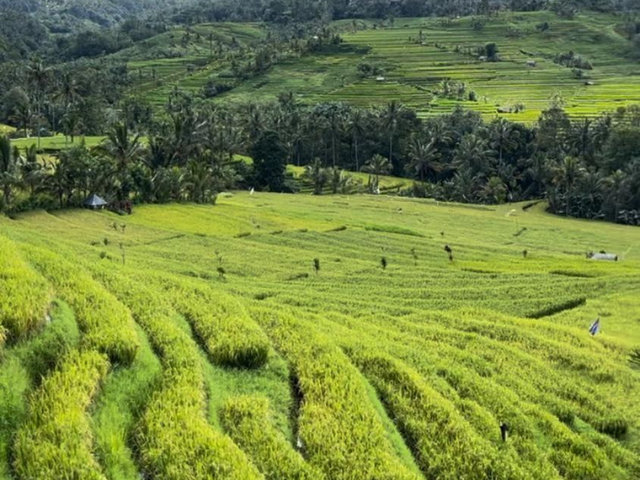
Bali's reputation as a place to reset is not marketing invention; it rests on a few real foundations. Balinese daily life is structured around ritual — the small offerings, the temple rhythm, the unhurried pace of village mornings — and that pace is contagious for a guest who lets it be. The landscape helps too: jungle, rice terraces and water are everywhere, and there is good evidence that time among them lowers the body's stress load.
There is also a depth of wellness tradition here that few destinations match. Balinese healing, yoga, plant medicine and spa craft are woven into the island rather than bolted on, which means the support for switching off — a sauna, a sound session, a quiet shala at dawn — is rarely more than a few steps away. We cover the island's most considered wellness stays in our guide to the best retreats in Bali.
The one caveat is geography. The disconnection you are looking for lives in the quieter regions, not in the busy south. Choosing the right base matters more than any other single decision, which is why we return to it at the end.
Four ways to switch off — and who each suits
There is no single right way to recharge, and pretending otherwise is how people end up on a retreat that does not fit them. Broadly, travellers switch off in one of four modes — and the best trips often blend two.
| Approach | What it involves | Best for |
|---|---|---|
| Structured wellness retreat | A guided programme — yoga, treatments, set meals, sometimes a digital-detox policy | Those who want the decisions made for them and momentum built in |
| Self-guided slow stay | An open schedule at one calm property; rest on your own terms | Independent travellers who find fixed programmes more pressure than relief |
| Pure nature immersion | Days led by the landscape — water, walks, gardens, long unstructured mornings | Anyone whose fatigue is mental rather than physical |
| Digital detox | A deliberate window or full break from screens, whatever the setting | The chronically over-connected; usually layered onto one of the above |
A structured retreat suits people who recharge best when someone else holds the plan; a self-guided slow stay suits those for whom a timetable is just another inbox. Most guests at a small property do a quiet version of all four — a little yoga, a lot of nothing, time by the water, and a phone left face-down.
How long you need to properly recharge
The honest answer is longer than a weekend. The first day or two of any break is decompression — the residual adrenaline of travel and work draining out, often with a headache or restlessness as it goes. Real rest tends to begin on day three or four, once the body trusts that nothing is about to demand its attention.
For a meaningful reset, five to seven nights in one place is the sweet spot: long enough to drop into the slower rhythm, short enough to stay precious. Three or four nights still helps if you protect them fiercely and resist the urge to sightsee. Anything under that is a pause, not a recharge — pleasant, but you will feel the difference within a week of being home. The other argument for staying put is travel itself: every transfer resets the clock, so a single calm base does more than three pretty ones strung together. We make the longer case for this in our guide to slow travel in Bali.
Building a day around rest, not activity

A recharging day is shaped by subtraction. Wake without an alarm. Move gently before the heat — a walk, a swim, twenty minutes of yoga — while the air is still cool and the light is soft. Eat when you are hungry rather than to a schedule, and eat well; food made from what grew nearby is part of the reset, not separate from it. Leave the middle of the day open. Read, sleep, sit by water, do nothing in particular and resist the guilt that says you should be seeing something. Save any one excursion for the cooler late afternoon, and keep evenings unhurried.
The thread running through it is permission — to be unproductive, unreachable and slow. That is the part no setting can do for you, but the right setting makes it far easier to grant yourself.
A slower morning at Nirjhara
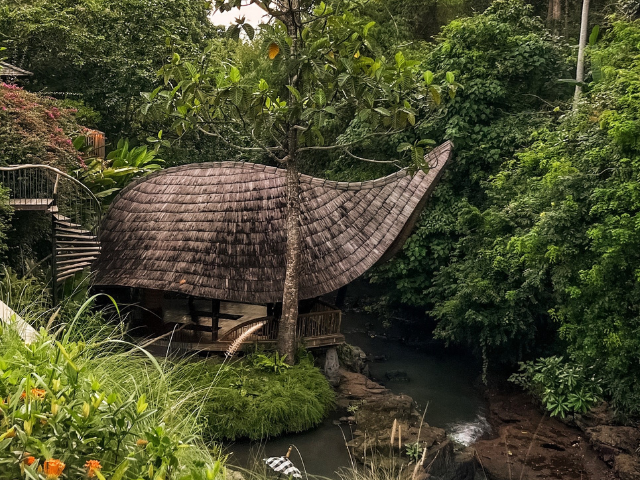
At Nirjhara, in the Tabanan countryside, the day tends to organise itself around water. The property is built around its own waterfall, which runs directly beneath the pool deck — no trail, no hike, simply there — so the first sound most mornings is moving water rather than anything man-made. The 25 villas sit among rice paddies and jungle, with around 85 per cent of the suites looking out over waterfalls, fields or the ocean sunset, which means the view does much of the work of slowing you down.
A typical morning might be a dawn session in the bamboo yoga shala overlooking the valley, a Finnish sauna at The Retreat, then breakfast at Ambu, the farm-to-table restaurant that sources more than 90 per cent of its produce from Bali and much of it from the property's own organic garden. After that, the day is deliberately empty. Canggu is 20 to 30 minutes away if you want it, but the point of a recharge here is that you rarely do. For travellers who want the support of treatments and quiet ritual without a rigid programme, it reads as one of the gentler options on the island — we include it among our best luxury spas in Bali.
Choosing where to base yourself
Where you stay decides whether disconnecting is effortless or a fight against your surroundings. The busy south — Seminyak, Kuta, central Canggu — works against rest by design; there is always somewhere to be. The quieter regions do the opposite. Tabanan, on the southwest coast, offers the easiest balance: genuinely calm rice-field and jungle settings within half an hour of Canggu, so you can disappear without being cut off. East Bali around Sidemen and the Munduk highlands go further into the landscape at the cost of a longer transfer.
For most people, a small property — a few dozen villas rather than a few hundred rooms — in one of these calmer zones is the single biggest factor in whether they come home actually rested. Scale shapes atmosphere: a large resort moves people through it like a small town, while a property of 25 villas feels closer to a private estate. For the considered, understated end of that spectrum, see our guide to quiet luxury in Bali.
Frequently asked questions
How do I truly disconnect on holiday in Bali?
Choose a quiet region rather than the busy south, stay in one place for several nights instead of moving around, and set a clear window for screens — many travellers keep mornings fully offline and check in briefly in the evening. A small property among rice fields or jungle removes most of the prompts to stay busy, which does more for switching off than willpower alone.
Is Bali a good place for a wellness reset?
Yes. Bali has a deep, lived wellness tradition — yoga, Balinese healing, spa craft and plant medicine are part of the culture rather than bolted on — and a landscape of jungle, water and rice terraces that naturally lowers stress. The support for recharging, from a dawn yoga shala to a sauna or sound session, is rarely far away, particularly in the quieter regions.
How many days do I need to properly recharge in Bali?
Plan for at least four nights, and five to seven for a meaningful reset. The first day or two is decompression, with real rest usually beginning around day three once your body trusts that nothing urgent is coming. Staying in one calm base rather than moving between hotels protects that recovery, because every transfer resets the clock.
Where in Bali is best for disconnecting?
The quietest options are East Bali around Sidemen, the Munduk highlands and the remote north, though each sits two to three hours from the airport. Tabanan, on the southwest coast, is the easiest balance — genuinely peaceful rice-field and jungle settings within 20 to 30 minutes of Canggu, so you switch off without isolating yourself.
Do I need a structured retreat to recharge, or can I rest on my own terms?
Either works; it depends on temperament. A structured retreat suits people who recover best when the decisions are made for them, with set yoga, treatments and meals. A self-guided slow stay at a calm property suits those who find a fixed timetable more pressure than relief. Many travellers blend the two — a little guided practice, a lot of open, unscheduled time.


