
Almost every wedding venue in Bali photographs well. The island makes that easy: ocean cliffs, river valleys, rice terraces, temples at the edge of the sea. Beauty is the starting point here, not the thing that sets a venue apart.
A luxury wedding venue in Bali is defined less by its view than by what it controls: who else is on site, where guests sleep, and what happens if it rains.
This guide covers what makes a venue luxury rather than simply beautiful, where on the island to marry, what each kind of setting asks of the day, and the questions to put to any venue before you sign. If you are still deciding how many people to invite, start with our guide to small weddings in Bali. For the legal route and the best months to marry, see our guide to choosing a Bali wedding resort.
What makes a wedding venue luxury
Five things, and none of them shows up in a photograph.
Exclusivity. A luxury venue is one where your wedding is the only thing happening. Not the only wedding that day, but the only event in the space you are using, with no other guests walking past the ceremony on their way to the pool. Ask what "exclusive" covers. At some venues it means the lawn; at others it means the whole property.
Rooms for the people you invited. Guests who have crossed an ocean to be there should be able to walk back to bed after the last dance. A venue with its own villas or suites turns a wedding into a stay, and lets the celebration carry on at its own pace rather than ending when the cars arrive.
A wet-weather plan you can see. Every venue in Bali says it has one. The difference is whether it is a real covered space, sized for your guest list and as considered as the main setting, or a function room nobody would choose. Ask to see it in person or in photographs taken on a wedding day.
A kitchen of its own. The wedding dinner should be cooked where it is served, by chefs who know the produce of that part of the island. Ask where the ingredients come from. The answer tells you more about the evening than a tasting menu will.
A ceremony space no one else walks through. Privacy is the quiet test of a luxury venue. Public beaches, shared paths and a neighbouring venue's sound system all count against it, however good the view.
Where to marry, region by region
Most couples choose the region before they choose the venue, and the region decides more about the week than the venue does. Each part of Bali gives a wedding something different and asks something different of the guests.
| Region | Character | Typical setting | What it asks of guests |
|---|---|---|---|
| The Bukit Peninsula (Uluwatu) | Limestone cliffs above the Indian Ocean | Clifftop lawn or pavilion at sunset | Wind on the day, and a south-coast base for the week |
| Ubud and the central highlands | River valleys, jungle and cooler evenings | Jungle or riverside pavilion | An inland stay; the sea is not part of the week |
| Tabanan | Rice terraces, rivers and a quiet surf coast | Rice field, waterfall or beach | A longer transfer from the airport, repaid in space and quiet |
| Seminyak and Canggu | A busy beach strip of restaurants and bars | Beachfront or private villa | Less privacy, with neighbours and public beach access |
| East Bali | The Sidemen valley and the slopes of Mount Agung | Valley or hillside villa | Distance from the airport and from the rest of the island |
The south suits couples who want drama and the ocean. The cliffs of the Bukit are the setting most people picture for a sunset ceremony, and the area is well set up for groups.
Ubud suits couples who want shade and calm. The river valleys are cooler in the evening and feel enclosed in the best sense, though the coast is a drive away.
Tabanan suits couples who want space. Bali's green agricultural province offers rice-field and coastal settings shaped by the subak irrigation system, with Tanah Lot 7 minutes from Nirjhara and a coastline far quieter than the south. It is where you can still find a rice field, a waterfall and a beach within one wedding day.
The beach strip suits couples who want the energy of the south coast and are comfortable sharing it. The east suits couples who want remoteness and guests who are happy to travel for it.
Five settings, and how each shapes the day
Each setting changes three things about the day: the timetable, the photographs and how comfortable your guests are. It helps to know which before you fall for a view.
Clifftop. The sunset sets the timetable. Look up the sunset time for your date and build the ceremony, the photographs and the first drink around it. Ask how close guests stand to the edge, how many steps lie between the ceremony and the reception, and whether older guests and children can manage them in evening clothes.
Waterfall and jungle. Under a canopy the light is soft and dappled, which flatters photographs, and dusk arrives earlier than in the open. The air is humid, which matters for hair, flowers and fabrics. Falling water is the backdrop to everything, so plan on microphones for vows and speeches.
Rice field. A rice field is working farmland before it is a backdrop, tended by farmers whose water is shared through the subak. Paths along the terraces are narrow, so ask how guests, chairs and catering reach the ceremony spot, and ask what stage the crop will be at in your month.
Beach. On the west coast the sun sets over the sea, which makes the beach the natural place for a late ceremony or for drinks after one. Sand changes what everyone wears on their feet, and the surf changes how far a voice carries. Bali's beaches are public, so expect passers-by.
Private residence. A residence feels like a family home rather than a venue. It suits an elopement, a ceremony for immediate family, or a long dinner after a larger celebration elsewhere on the property.
Questions to ask any venue
Photographs show a venue on its best day. These questions show it on yours.
| Question | Why it matters |
|---|---|
| Can we see the ceremony space at the hour we would marry? | Light, shade and heat change completely through the day |
| What will the setting look like in our month? | Rice fields, gardens and waterfalls all change with the season |
| Where do guests wait before the ceremony, and where is the shade? | The half hour before the vows is often the least comfortable |
| How do guests reach each setting from their rooms? | Steps, slopes and paths decide who can join in comfortably |
| What can be heard at the ceremony spot: water, surf, road or neighbours? | Vows need to be heard by everyone present |
| Can we see photographs from a wedding held here in the wet season? | Shows the venue as it may be on your day, not its best one |
| Which parts of the property stay open to other guests on the day? | Defines how private the wedding will be in practice |
| When can the space be dressed, and when must it be cleared? | Sets the timetable for flowers, lighting and the last dance |
Legal and season, in brief
Two decisions sit alongside the choice of venue. The first is whether to marry legally in Indonesia or hold a symbolic ceremony in Bali and complete the legal marriage at home. The second is the month. Both are covered in our guide to choosing a Bali wedding resort.
For guests, the practical point is entry. Most will need a visa, which can be applied for in advance on Indonesia's official e-Visa site, evisa.imigrasi.go.id. Our Bali e-Visa guide explains the process. And check your date against Nyepi, Bali's Day of Silence, when the island stops for twenty-four hours.
Weddings at Nirjhara
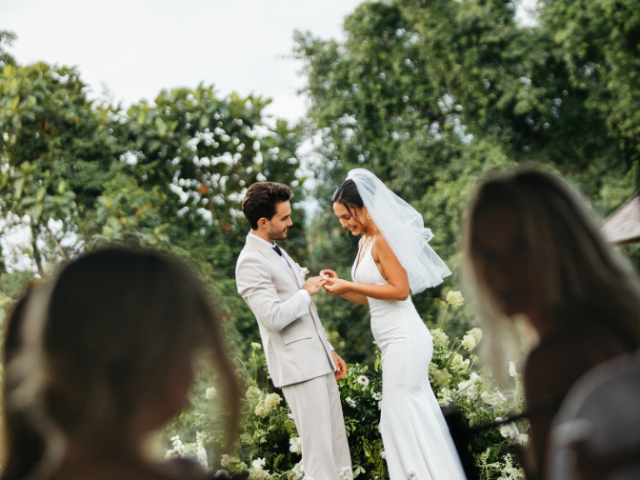
This is our own property, so read this section with that in mind.
Nirjhara sits in Kedungu, Tabanan, on the southwest coast, in Bali's green agricultural province. The airport (DPS) is approximately 90 minutes away, and we say 90 because that is what the drive takes. In return, Tanah Lot is 7 minutes away, Kedungu Beach is 2 minutes, with three surf breaks, the Jatiluwih rice terraces are 45 minutes and Ubud is an hour.
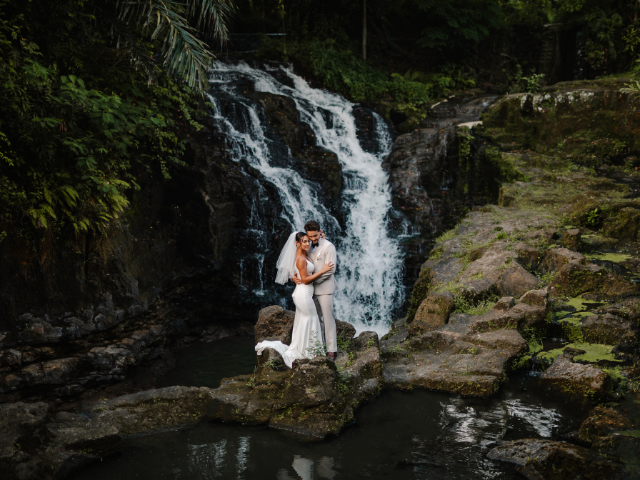
Twenty-five villas. At that scale a wedding group is a large part of everyone staying, not one booking among hundreds. Eighty-five per cent of the suites have views, and they stay in villas that include the Jungle Pool Villa and The Residence, which has 240m² of usable space.
Four settings. A stage overlooking our cascading ponds with the rice fields in the backdrop. A tropical bamboo pavilion facing the waterfall. Our nearby beach, by the ocean. And the Residence, for the most intimate gatherings. You can see each of them on our weddings and events page.
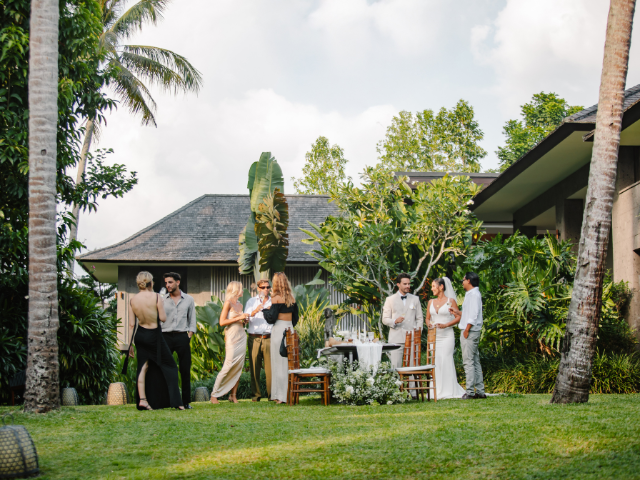
The rest of the stay. Ambu is our farm-to-table restaurant, drawing on a 700m² organic garden on the property. Our yoga shala was designed by IBUKU. Nirjhara holds One MICHELIN Key.
What we are not. If you want the energy of the south coast's beach clubs on the doorstep, we are the wrong choice. If you want space, quiet and a wedding that feels as if it belongs to Tabanan, we would like to hear from you.
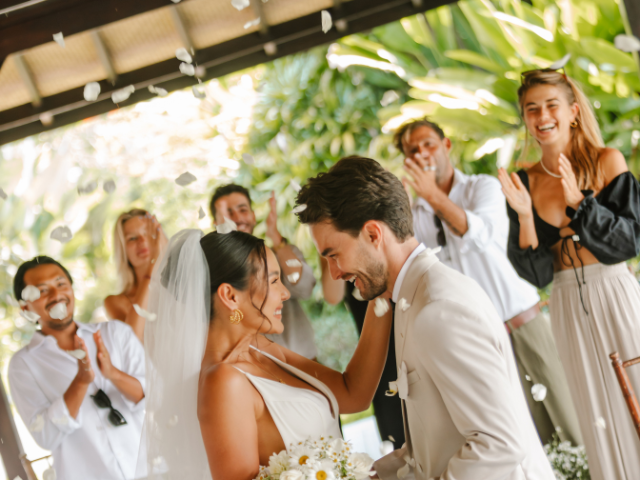
To see the four settings, visit our weddings and events page. To check a date, contact us with the month you have in mind and an idea of numbers.
Frequently asked questions
What makes a wedding venue in Bali luxury?
Not the view, which almost every venue on the island has. A luxury venue gives you exclusive use of the spaces you are using, rooms for your guests on site, a real covered alternative if it rains, a kitchen of its own and a ceremony space nobody else walks through.
Which area of Bali is best for a luxury wedding?
It depends on the setting you want. The Bukit Peninsula has clifftops above the ocean, Ubud has jungle and river valleys, and Tabanan has rice fields, waterfalls and a quiet coast. Choose the region for the setting and the week you want your guests to have.
Can you book a Bali wedding venue for exclusive use?
Some venues, usually the smaller ones, can be reserved entirely for a wedding group. Others offer exclusive use of a single space for the ceremony and dinner while other guests stay elsewhere on the property. Ask which parts remain open to other guests on the day, because that defines how private it will feel.
What happens if it rains on a Bali wedding day?
Every serious venue has a covered alternative. The question is whether it suits your guest list and is as considered as the main setting. Ask to see it, in person or in photographs from a real wedding, rather than accepting a description, especially between November and March.
Are there noise curfews at Bali wedding venues?
Often, yes. Rules vary by area and by venue, particularly where there are neighbours. Ask for the hour when amplified sound has to end, both in the open and under cover, and whether the limit covers speeches as well as music. The answer shapes the reception more than most couples expect.
How far in advance should you book a luxury wedding venue in Bali?
As early as you can once you have a date in mind, because the most popular dry-season weekends go first and the best venues host only a few weddings. Confirm the date in writing, check it against Nyepi and give guests enough notice to arrange flights.


