
Most visitors see Balinese dance once, at an evening performance, and leave having enjoyed it without quite knowing what they watched. That is a pity, because the dances are precise, meaningful and rooted in temple life.
Balinese dance is a language of eyes, fingers and music, performed first for the gods and only second for an audience, and knowing a little of that language changes what you see.
This guide covers the main forms of Balinese dance, the gamelan music that drives them, where to see them and how to watch. For the temples where many dances began, see our guide to the best temples in Bali.
Dance for the gods, and for guests
In Bali, dance began as an offering. At temple festivals, dances are performed in the inner courtyards for the gods and ancestors, and some are never performed anywhere else.
Other dances sit between the temple and the stage. They are performed at ceremonies and in the outer courtyards, and versions of them are performed for visitors. And some forms were created for audiences in the first place. The performances most visitors see belong to these last two groups, but the training, the costumes and the discipline come from the first.
Children begin learning young, in village halls and dance studios, and many performers are still at school. A dancer's training is long, and it shows in every movement.
The dances worth knowing
These are the forms you are most likely to encounter, and the ones worth seeking out.
| Dance | What you see | The music | Where it is usually seen |
|---|---|---|---|
| Legong | Two or three young dancers in gold brocade, with intricate movements of the eyes, fingers and feet | A full gamelan orchestra | Evening performances in Ubud and at temple festivals |
| Kecak | A circle of men chanting in rhythm around a fire while dancers act out a story from the Ramayana | No instruments; the chorus of voices is the music | Sunset performances, most famously at Uluwatu |
| Barong | A lion-like protective creature and the witch Rangda, in a drama of good and evil that never fully resolves | A full gamelan orchestra | Daytime performances and village ceremonies |
| Baris | A solo warrior dance, sharp and proud, with sudden changes of expression | Gamelan, following the dancer's lead | Temple ceremonies and performances |
| Pendet | A dance of welcome, with dancers scattering flower petals | Gamelan | Temple ceremonies and the opening of performances |
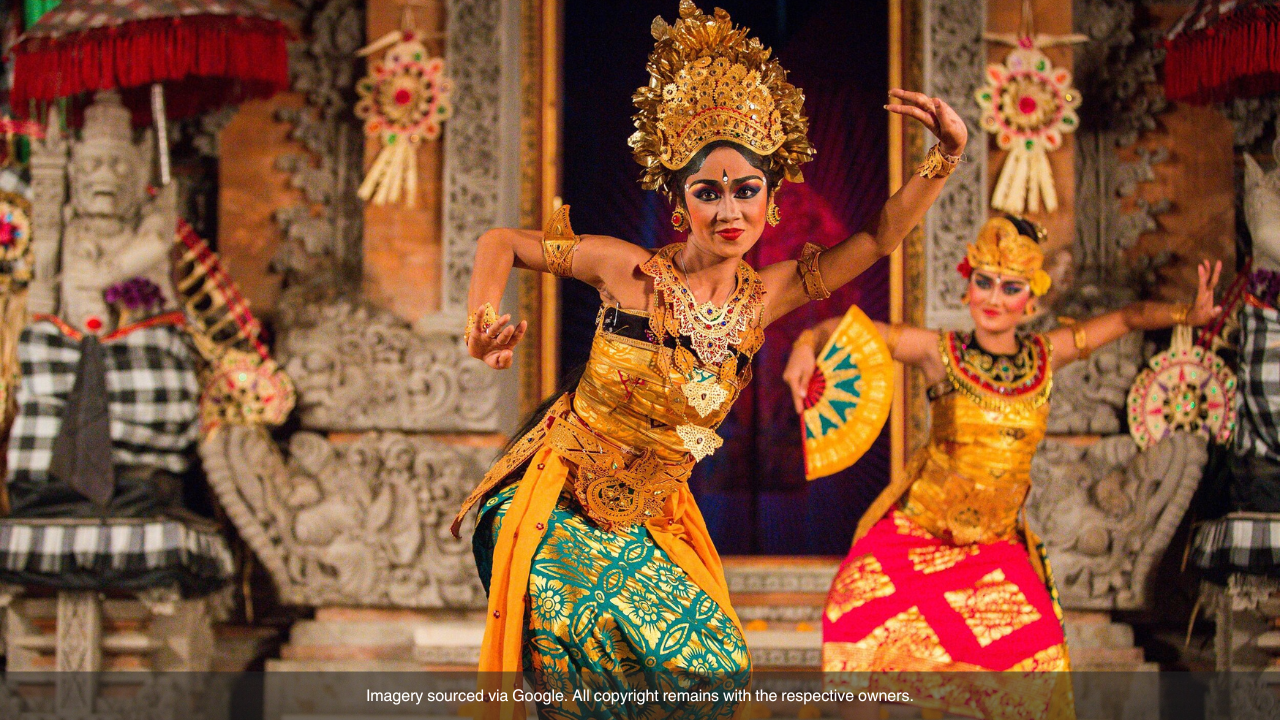
Legong is the most refined. Watch the eyes and the fingers rather than the feet. Every flick has meaning, and the dancers hold expressions that change in an instant.
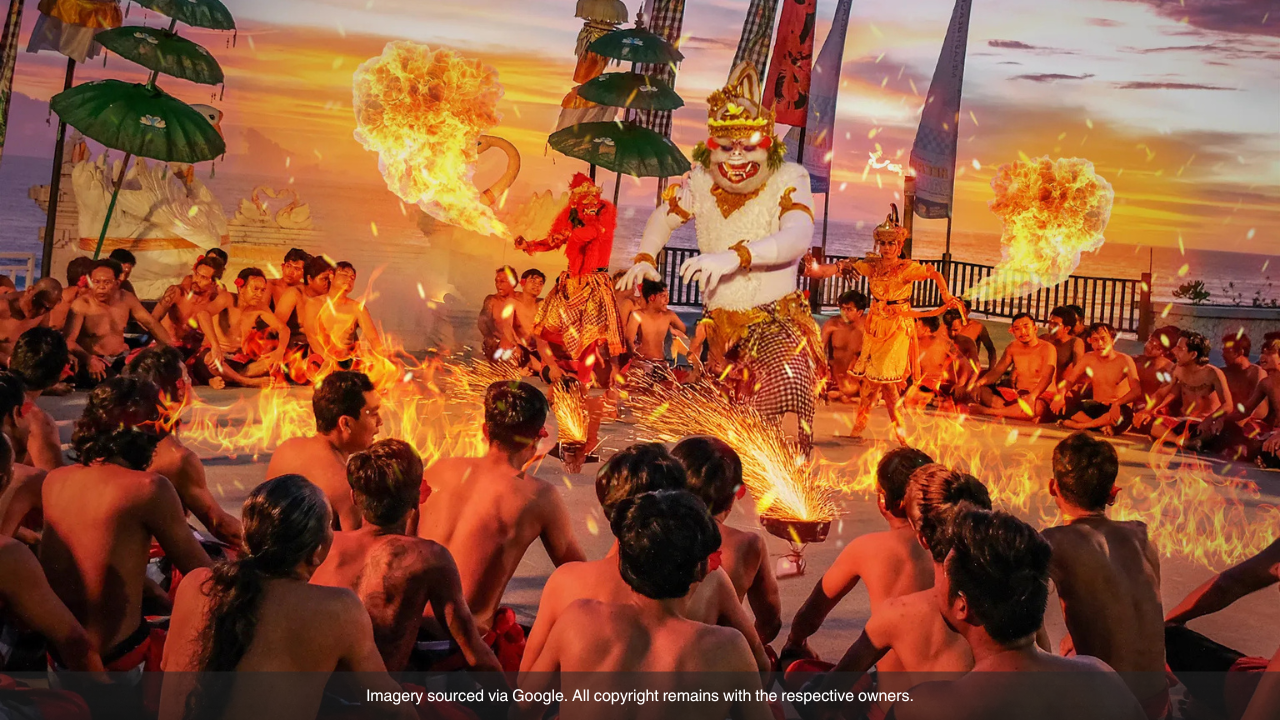
Kecak is the most striking. It has no instruments at all: the rhythm comes from the voices of the chorus, layered and interlocking. Seen at sunset by the sea, it stays with you. Our Uluwatu guide covers the clifftop setting.
Barong is the most theatrical. It is a drama of balance rather than victory, because in Balinese thought good and evil are both always present.
The music: gamelan and rindik
Balinese dance cannot be separated from its music. The dancers and musicians respond to each other, and in some dances the drummer follows the dancer's every move.
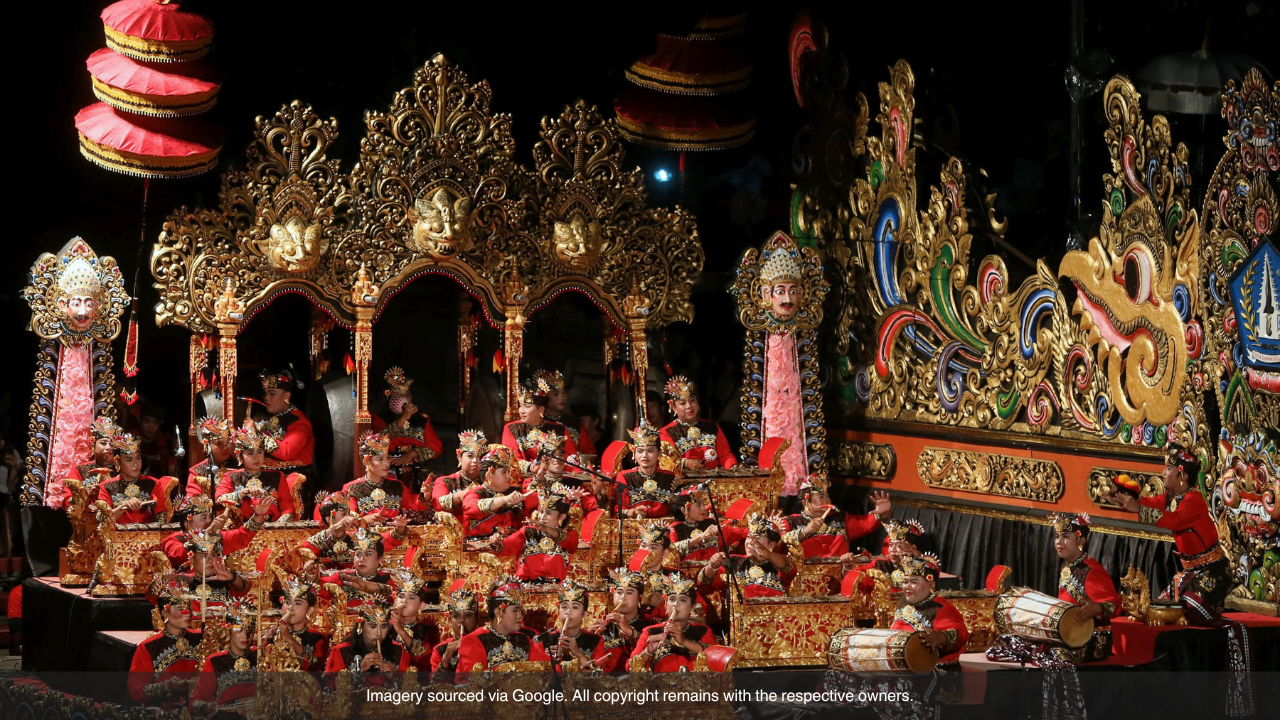
Gamelan is an ensemble built mostly around bronze: metallophones, gongs, cymbals and drums. Balinese gamelan is fast, bright and full of sudden changes, with pairs of instruments tuned slightly apart so that the sound shimmers. Many villages have their own orchestra, and its members rehearse together for years.
Rindik is gentler: a bamboo instrument played with soft mallets, its sound closer to water than to bronze. It is often heard at ceremonies and in quiet places, and its calm makes it a natural accompaniment to the end of the day.
How to watch Balinese dance
A few things make a performance richer.
| Question | Why it matters |
|---|---|
| Is this a temple ceremony or a performance for visitors? | At ceremonies you are a guest; dress and behave as you would in a temple |
| What story is being told? | Most programmes give a summary; reading it first makes the drama clear |
| Where should we sit? | Sit near the front to see the dancers' eyes and hands |
| Can we photograph? | Flash is distracting, and at ceremonies some moments should not be photographed |
| Is there a chance to meet the musicians? | Seeing the gamelan up close after the show explains how the sound is made |
Read the story first. Most performances tell episodes from the Ramayana or Balinese legend. Knowing the plot lets you watch the dancing rather than follow the narrative.
Respect ceremonies. If you are invited to a temple festival, wear a sarong and sash, keep to the outer areas unless invited further, and never walk in front of people at prayer.
Look out for ceremony days. Temple festivals and holy days such as Nyepi, Bali's Day of Silence, shape the island's calendar. Dance follows that calendar too.
Staying at Nirjhara
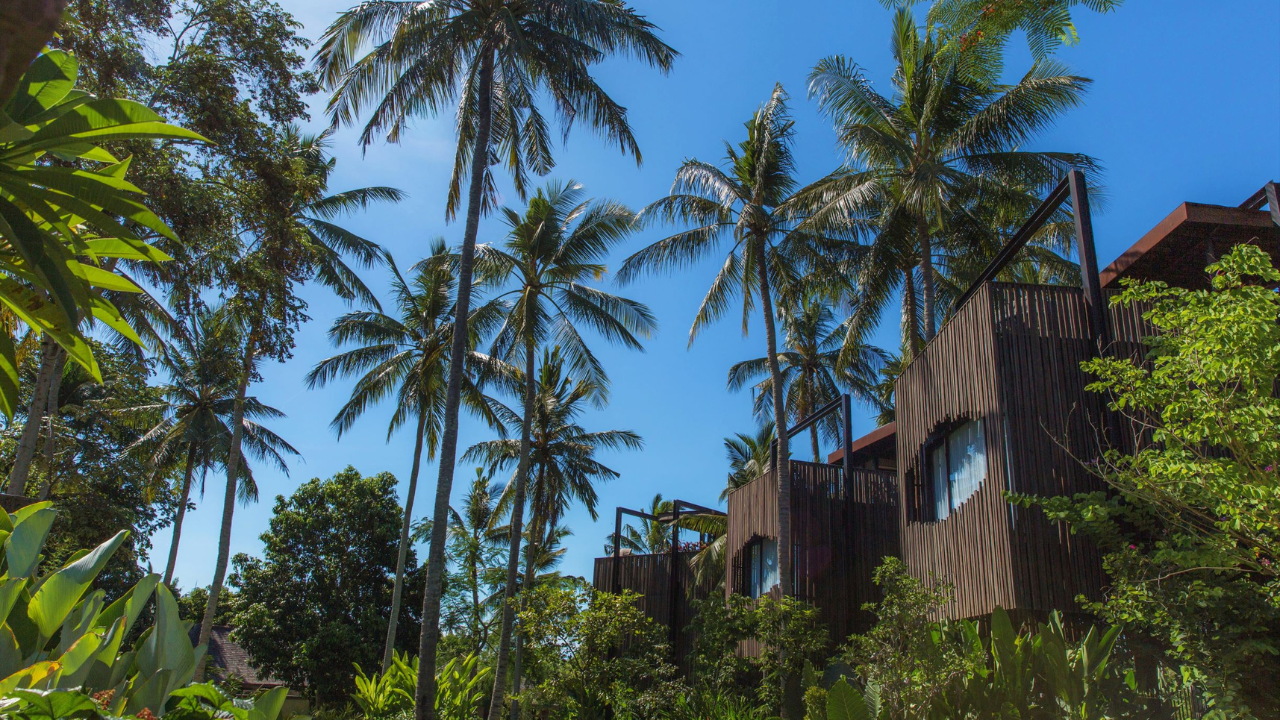
This is our own property, so read this section with that in mind.
Nirjhara sits in Kedungu, Tabanan, on the southwest coast, in Bali's green agricultural province, among rice fields watered by the subak irrigation system, where village life and its ceremonies still set the rhythm of the year.
Experiences. Our experiences page lists what can be arranged during a stay, from cooking and mixology classes to guided bicycle tours through the rice fields.
Close to the temples. Tanah Lot is 7 minutes away, Kedungu Beach is 2 minutes and Ubud is an hour's drive.
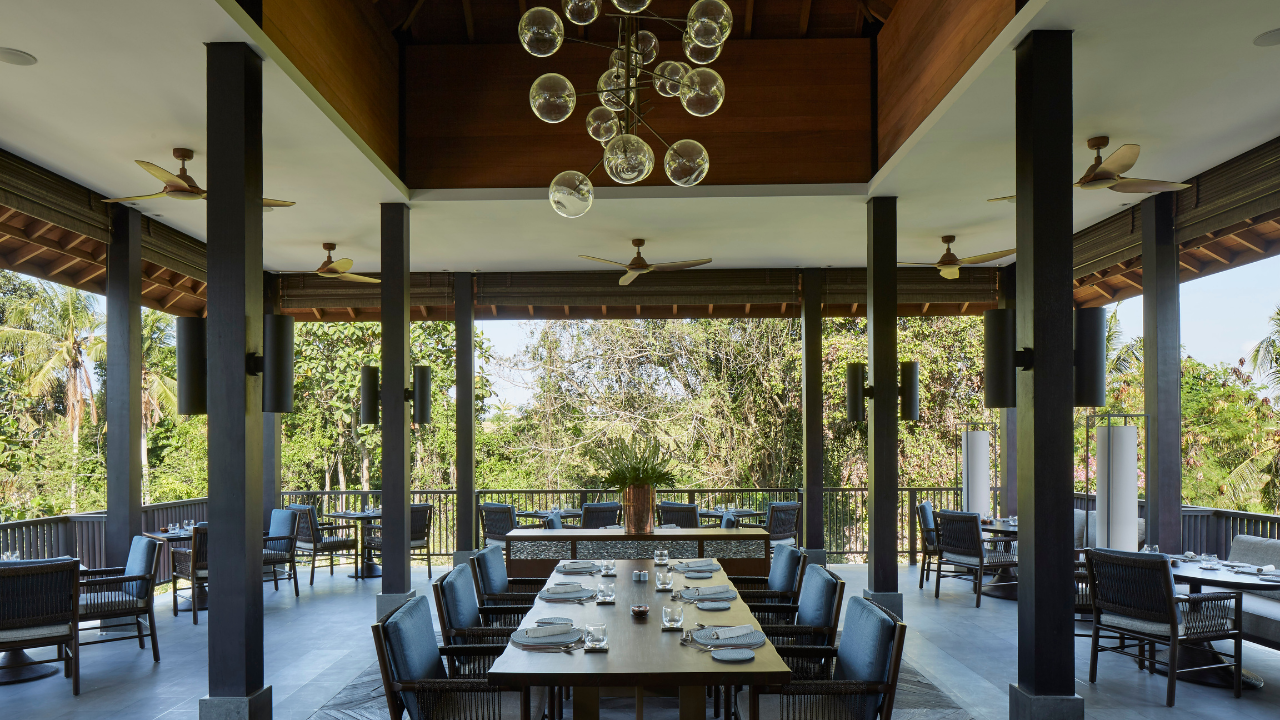
The rest of the stay. Our twenty-five villas include the Jungle Pool Villa, and 85 per cent of the suites have views. Ambu is our farm-to-table restaurant, drawing on a 700m² organic garden. Nirjhara holds One MICHELIN Key.
Getting here. The airport (DPS) is approximately 90 minutes away. Most visitors need a visa, which can be applied for in advance on Indonesia's official e-Visa site, evisa.imigrasi.go.id; our Bali e-Visa guide explains the process.
To plan your stay, contact us.
Frequently asked questions
What is the most famous Balinese dance?
Legong and kecak are the best known. Legong is a refined dance performed by young women with intricate eye and finger movements, while kecak is performed by a large chorus of men chanting in rhythm, without instruments.
What is the difference between legong and kecak?
Legong is danced by two or three young dancers to a full gamelan orchestra and is known for its precision. Kecak has no instruments: a circle of men creates the rhythm with their voices while dancers act out a story from the Ramayana.
What is gamelan?
An ensemble built mostly around bronze, including metallophones, gongs, cymbals and drums. Balinese gamelan is fast and bright, with pairs of instruments tuned slightly apart so that the sound shimmers. It accompanies most Balinese dances.
Where can I see Balinese dance?
Evening performances are held regularly in Ubud, and kecak is performed at sunset at Uluwatu. The most authentic setting is a temple festival, if you are invited, where dances are performed as offerings.
Can visitors learn Balinese dance?
Yes. Some dance studios and hotels offer classes for visitors, usually starting with legong hand and eye movements. Even a single lesson shows how much training the dancers need.
What should I wear to a Balinese dance performance?
For performances for visitors, comfortable evening clothes are fine. At a temple ceremony, wear a sarong and sash and cover your shoulders, as you would at any temple.


