
Steak is not a Balinese dish, and that is the useful place to start. Bali's cattle are small, lean and not raised for the grill, so almost every serious steak on the island arrives on a plane — predominantly from Australia. Everything else about eating steak in Bali follows from that fact: where the restaurants are, what they charge, and why the good ones talk about their supplier before they talk about their sauce.
This guide covers the steakhouses worth the journey, what you are actually ordering when you read a Bali steak menu, and how to book.
Bali's steak scene is a Seminyak story
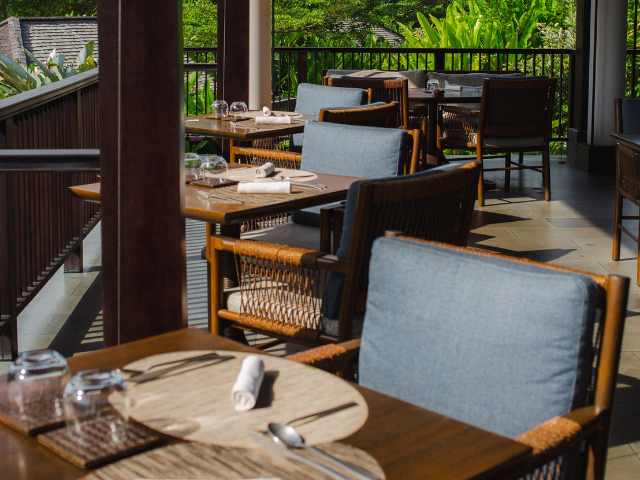
Look for a proper steakhouse on this island and you end up in one neighbourhood.
Seminyak has the concentration for a straightforward reason: it has the longest-established fine-dining market in Bali, the highest density of visitors who will pay imported-protein prices, and the supply chains to match. Canggu has the volume and the beach clubs, but its restaurant culture runs toward brunch, bowls and small plates. Ubud is largely plant-forward. The Bukit is hotel dining.
So while there are excellent individual cuts served across the island — most large resorts have a grill, and several are very good — the standalone steakhouses cluster in and around Seminyak. Plan accordingly: if steak is the evening, book in Seminyak and stay near it.
The steakhouses
| Restaurant | Where | What it is |
|---|---|---|
| Boy'N'Cow | Jl Raya Kerobokan 138, Seminyak | Dry-aged and wagyu, presented as a meat boutique rather than a grill room. The most specialist of the four |
| Saltlick | Seminyak | Wood-fired steak, built around the fire rather than the cut list |
| Gambinos Bali | Seminyak | A 1950s New York Italian steakhouse — two floors and an open-air roof. Steak, seafood and pasta rather than steak alone |
| FIRE, at W Bali – Seminyak | W Bali, Seminyak | Flame-grilled cuts in a hotel setting, with the service and reliability that implies |
Four rather than fourteen is deliberate. These are the ones whose own websites state plainly what they do and where they are — which, on an island where restaurants open and close quickly and old domains get repurposed, is a more useful filter than a longer list.
Boy'N'Cow — Jl Raya Kerobokan 138, Seminyak
Presented as a meat boutique rather than a grill room: the cuts are the display, dry-aging is visible, and the room is built around that rather than around a view. Wagyu and dry-aged beef are the reason to come, and the kitchen assumes you know what you are ordering — which makes it the most rewarding of the four if you do, and the most exposed if you do not. Compact, dark, cocktail-led, and better for two than for eight.
Saltlick — Seminyak
Built around the fire. Wood-fired cooking is the organising idea rather than a technique applied to a long cut list, and the menu is shorter for it. That focus is the appeal: fewer decisions, and a smokiness that the gas-grilled competition cannot reproduce. It suits a group who want one good thing done properly, and it is the most relaxed room of the four.
Gambinos Bali — Seminyak
A 1950s New York Italian steakhouse transplanted whole — two floors, an open-air rooftop, red leather and a soundtrack to match. The theme is committed rather than decorative, and the Italian-American side of the menu is not an afterthought, so it works for a table where not everyone wants steak. The rooftop is the reason to book rather than walk in.
FIRE, at W Bali – Seminyak
Flame-grilled cuts inside a hotel, with everything that implies: consistent service, a wine list with depth, and a room that holds a business dinner or a celebration without effort. It is the most predictable of the four, and predictability is the point — it is the one to choose when the meal has a job to do. Reservations through the hotel, and worth asking for a table away from the main thoroughfare.
What you are actually ordering
Bali steak menus use a shorthand that is worth decoding before you sit down.
Australian wagyu is not Japanese wagyu. Most of what Bali serves as wagyu is Australian crossbred, graded on a marble score. It is excellent and it is a different product from Japanese A5. If a menu does not say which, ask.
Grain-fed and grass-fed are a choice, not a hierarchy. Grain-fed is richer and more marbled; grass-fed is leaner and more mineral. Australian menus in Bali usually carry both. Neither is the better steak — they are two different things, and the mistake is ordering a heavily marbled grain-fed cut in the tropics when what you actually wanted was something lighter.
Dry-aged means a real programme, or it means nothing. Restaurants that dry-age properly will tell you the number of days and usually show you the cabinet. Where the menu just says "aged", it is worth asking what that means.
The price reflects the flight, not the mark-up. Imported beef in Indonesia is a different cost base from anything sourced locally. A steakhouse bill in Seminyak will sit closer to a European one than the rest of your Bali dining will. That is the import, not the restaurant.
Booking and timing
Book, particularly at weekends and across the December to January peak. The steakhouses are small relative to the beach clubs and they fill.
Go later than you would at home. Bali dines late, and the sunset — which falls between roughly a quarter past six and a quarter to seven all year — pulls the whole evening back. A 20:00 table is normal.
Check the dress code. Seminyak restaurants generally enforce one in the evening, and swimwear that is fine at lunch will not be at dinner.
Consider the drive. Traffic between Seminyak, Canggu and anywhere further north is the real constraint on an evening out, and it is worse than the map suggests. If you are staying outside the south, plan the journey before you plan the table.
The other way Bali does dinner
There is a second answer to eating well here, and it runs in the opposite direction from an imported steak.
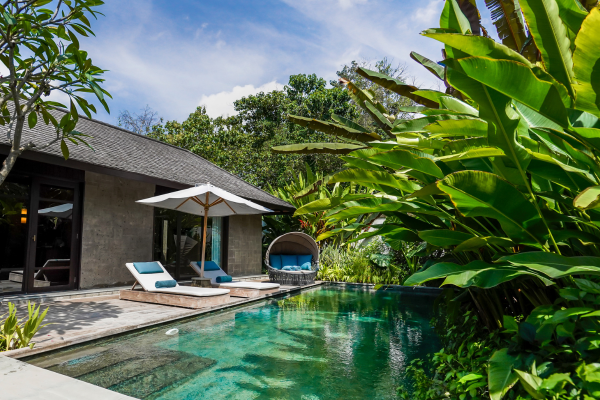
Bali's western province of Tabanan is the island's agricultural heartland — rice, vegetables, river valleys and the subak irrigation system that has organised the water for a thousand years. Cooking there is short-supply-chain by default rather than by philosophy.
Nirjhara's restaurant, Ambu, sources more than ninety per cent of its ingredients locally, including from a 700-square-metre organic garden on the property. That is a genuinely different proposition from a Seminyak grill room, and it is not a substitute for one. Anyone spending a fortnight on the island will happily do both: a steak in Seminyak, and the rest of the week eating what grows within a few kilometres.
For the wider picture of dining on the island, our guide to the best restaurants in Bali covers the range.
What a steak costs in Bali, and why
Almost all the beef served in Bali's steakhouses is imported, predominantly from Australia, and that single fact sets the pricing for the whole category. Bali's own cattle are small, lean and not raised for grilling, so a serious steak arrives by plane before it reaches a grill. Import duty, cold chain and restaurant margin then stack on top.
The practical consequence for a diner: a steak in Seminyak is not priced against a local meal, it is priced against a steak in Sydney or Singapore, and comparing it to the warung down the road will only produce annoyance. What Bali does add for the money is the room, the service and the setting — which is why the four restaurants above are as much about the space as the cut.
Grades follow the Australian system in most kitchens here, and the marbling score on the menu is doing more work than the name of the cut. A higher score means more intramuscular fat, a richer result and a smaller sensible portion.
What to order if you are not sure
Three rules cover most menus in this category.
Match the cut to the appetite, not the price. A high-marbled wagyu at 200 grams will defeat more people than a 400-gram sirloin. Richness, not weight, is what fills you.
Ask how it is cooked before you ask what it costs. Wood fire, charcoal and gas produce genuinely different results from the same cut, and the kitchens above have each committed to one. That decision affects the plate more than the difference between two neighbouring grades.
Order the sides separately and share them. Steakhouse portions in Bali follow the American convention — sides are not included and they are large. Two between four is usually right.
Frequently asked questions
Where is the best steak in Bali?
The standalone steakhouses cluster in and around Seminyak — Boy'N'Cow, Saltlick, Gambinos and FIRE at W Bali are the most established. Elsewhere on the island, the best steak is usually found in resort grill rooms rather than dedicated steakhouses.
Is steak expensive in Bali?
Relative to the rest of dining on the island, yes. Almost all steak served in Bali is imported, predominantly from Australia, so the price sits much closer to what you would pay in Europe or Australia than the rest of your Bali meals will.
Does Bali have wagyu?
Widely, though most of it is Australian crossbred wagyu graded on a marble score rather than Japanese wagyu. Both appear on Bali menus. If the distinction matters to you, ask which is being served.
Do I need to book a steakhouse in Bali?
Yes, especially at weekends and across the December to January peak. These restaurants are small compared with Bali's beach clubs and they fill early.
Is there local Balinese beef?
Bali cattle exist and are locally significant, but they are a small, lean breed not raised for grilling, and they do not feature on steakhouse menus. Beef for steak is imported.
What should I eat in Bali if not steak?
The island's strength is short-supply-chain cooking — vegetables, rice, seafood and spice grown or landed within a few kilometres. Farm-to-table restaurants, particularly in the agricultural west and around Ubud, are where Bali is genuinely distinctive rather than merely competent.


